
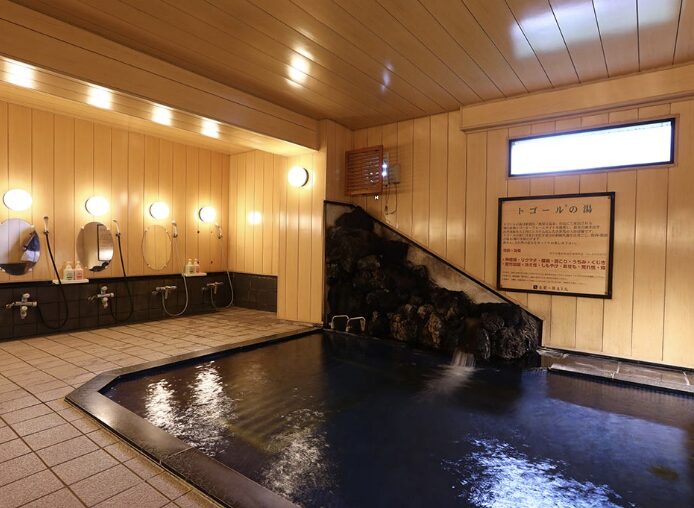
Hoppo, Takamagahara, Kuma-no-Yu. In Shiga Kogen, a mountain full of famous hot springs, the Ichinose area is the one place where no hot spring bubbles up. And yet, long after you climb out of the bath, your body stays warm to the core. The secret turns out to be “Togoal-no-Yu,” a bath born from an ore that can be mined only three months a year.
In a Shiga Kogen Full of Famous Hot Springs, Ichinose Alone Has None
Shiga Kogen is a mountain blessed with hot springs. Hoppo Onsen, Takamagahara Onsen, Kuma-no-Yu Onsen. As you’d expect of a volcanic zone in the Shirane range, hot water rises up all over the area. Head down the mountain and you reach Shibu Onsen and Yudanaka Onsen, historic hot spring towns known throughout the country.
And yet the Ichinose area, which sits right at the heart of Shiga Kogen, has no hot spring at all. This, despite being a major hub where 21 inns gather together.
When we asked why, we came across a surprising fact. It isn’t that hot water “doesn’t rise here,” but that it “isn’t drawn in.” The Zakko River system that flows through Ichinose is home to wild char (iwana), and to protect them there’s an agreement not to discharge hot spring water into it. In other words, Ichinose is an area that made a deliberate choice to forgo hot springs in order to protect its river and its fish.
And Yet, You Come Out of the Bath Warm All Over
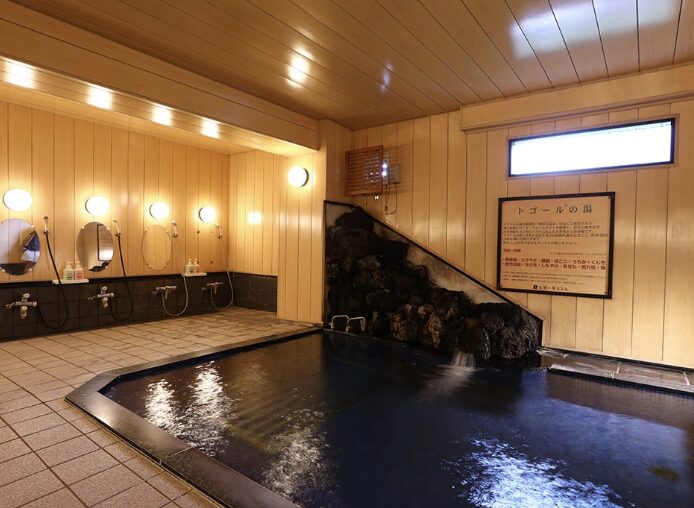
Stay at an inn in Ichinose and, even though there’s supposedly no hot spring, the bath is wonderful. After you step out of the large communal bath, that deep warmth lingers right to your fingertips and toes for a long while. Honestly, if someone told you it was a hot spring, you’d believe them.
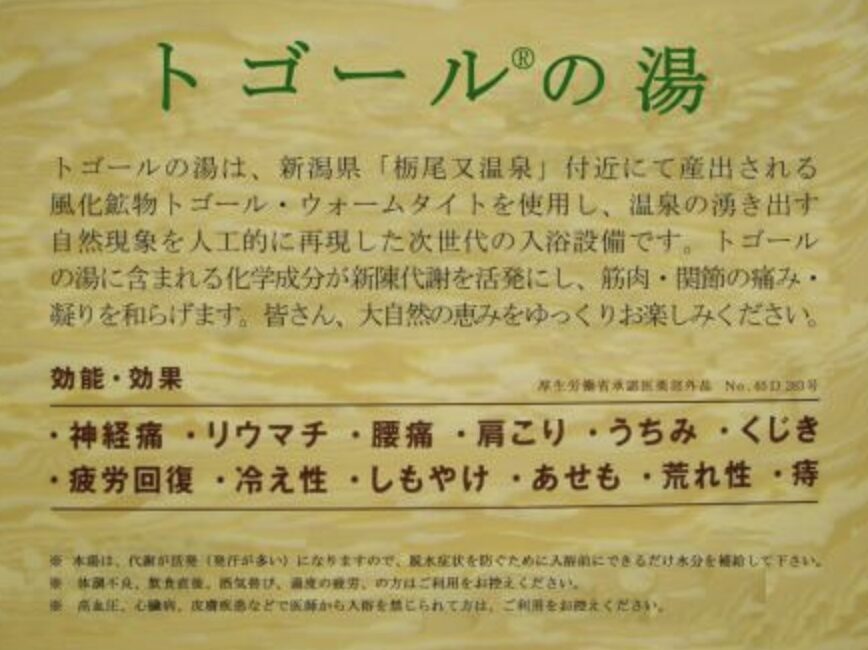
On the notice board, the words “Togoal-no-Yu.” There’s even a list of health benefits posted alongside it. A list of benefits, for an artificial hot spring? It was a name we’d never seen before, so we looked into it.
The True Identity of Togoal-no-Yu: An Ore from Niigata Prefecture
Togoal-no-Yu is an artificial hot spring that uses a natural ore called “Togoal ore.” It’s made by the Togoal Research Institute Co., Ltd. (Yuzawa, Niigata Prefecture). Research began in 1979, so it has a track record of more than 40 years.
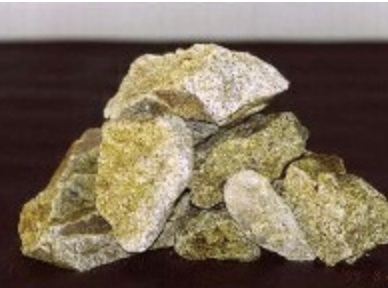
The raw material, Togoal ore, is a weathered granite mined near Tochiomata Onsen in Niigata Prefecture. Tochiomata is counted among Japan’s three great radium hot springs, a place people have long visited for healing baths, and the stones from that area have been known since the old days as “bath stones” or “medicinal stones.” They’re rich in minerals such as sodium, potassium, calcium, magnesium, and iron, and one of their traits is how readily those minerals dissolve into water.
The mechanism is simple: the ore is processed into granules called “Togoal® Warmtight,” and the bath water is passed through them so that the minerals dissolve into it. Rather than mixing something into the water like a bath additive, the image is of water becoming a hot spring as it passes among the stones. That’s why it looks colorless and clear, with no scent.
It Can Be Mined Only Three Months a Year
The mining site is deep in the mountains of Niigata, where snow piles up to 14 meters. For half the year it’s inaccessible under snow. On top of that, because it’s a habitat of the golden eagle, mining reportedly avoids the breeding and nesting season and is possible for only about three months a year.
In Ichinose’s baths, kept free of hot spring water for the sake of the char, sits ore mined with care for the golden eagle. It must be pure coincidence, but it’s an almost too-perfect pairing.
The Benefits Carry National Approval: Don’t Write It Off as “Just Artificial”
People tend to look down on artificial hot springs, but Togoal Warmtight is a quasi-drug approved by the Ministry of Health, Labour and Welfare. The recognized benefits include neuralgia, rheumatism, lower back pain, stiff shoulders, bruises, fatigue recovery, sensitivity to cold, chilblains, heat rash, rough skin, and hemorrhoids. Clinical trials targeting lower back and knee pain have also reported favorable results at academic conferences.
There are practical advantages too. Because it’s colorless, clear, and odorless, it’s easy to enjoy even for people who dislike sulfur springs, those with sensitive skin, or families with children. That lasting warmth, it turns out, comes from the bathing effect of the minerals and from improved blood circulation, which means there was solid backing for what our bodies were feeling.
In Ichinose, You Can Choose Your Inn by Its Bath
What we learned from our reporting is that each inn in Ichinose creates a “good bath” to soothe its guests’ weariness, each in its own way.
| Inn | Bath | Features |
|---|---|---|
| Shiga Ichii Hotel | Togoal-no-Yu | Large bath open 24 hours; available even after checkout |
| Hotel Mutsumi | Togoal-no-Yu | Open 24 hours; sauna on site |
| Hotel Sanraku | Toron Onsen (artificial hot spring) | Large bath with a jacuzzi |
| Hotel Ichinose | Quasi-natural Komyoseki hot spring | Three types: stone bath, cypress bath, and cascade bath |
| Hotel Japan Shiga | Natural spring-water bath | Natural water from the Ichinose source, heated |
Togoal, Toron, and Komyoseki are all leading ores of Japan’s artificial hot springs. An area where all three types sit within walking distance is a rarity nationwide, making Ichinose something of a “showcase of artificial hot springs.” You can enjoy comparing them over consecutive nights, and on a day when you simply must soak in a natural source, the location is such that a short trip to Hoppo Onsen or Kuma-no-Yu will do the trick.
The Resolve to Forgo Hot Springs, and Wonderful Time Spent
Ichinose’s lack of a hot spring was a choice made to protect its river and fish. In its place, the inns brought in a mineral bath drawn from an ore that can be gathered in the snowy mountains only three months a year. Behind the words “no hot spring” lies a coherent set of circumstances and ingenuity all its own to this land.
The story of Ichinose’s water is also featured in our special article, “A Highland Resort That Lives with Water: What Kind of Place Is Ichinose?” On your next stay, take a moment to glance at the notice board in the changing room.
Related Links and Sources
- What Is the Togoal Artificial Hot Spring? (Togoal Research Institute Co., Ltd.)
- Togoal Research Institute: The Mine / Medical Study of the Baths
- Shiga Ichii Hotel / Hotel Mutsumi / Hotel Sanraku / Hotel Ichinose / Hotel Japan Shiga
- The Difference Between Natural and Artificial Hot Springs (Ikiiki Yume Roman)