
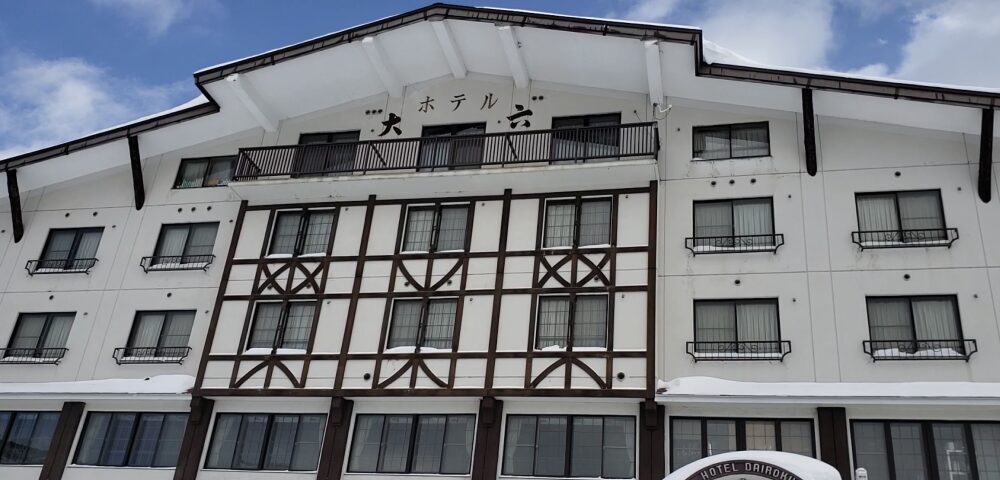
Located near the center of Shiga Kogen, Ichinose is the area where the largest number of hotels gather. Some guests have been returning here for decades, drawn by the convenience of being able to walk to the ski slopes and by the mountain views from Panorama Parking.
Standing in one corner of this area is Hotel Dairoku, an inn that has continued for three generations since the Showa era. We spoke with the third-generation owner about how the hotel began, what kind of place Ichinose is, and what may come next.
What he shared was not only a story of bright and bustling tourism.
“I think everyone working together to do that is a symbol of Ichinose’s unity.”
The history of the inn, the customs of the land, and the things that should change — and the things that should not. Through the story of one hotel, we begin to see the true face of Ichinose.
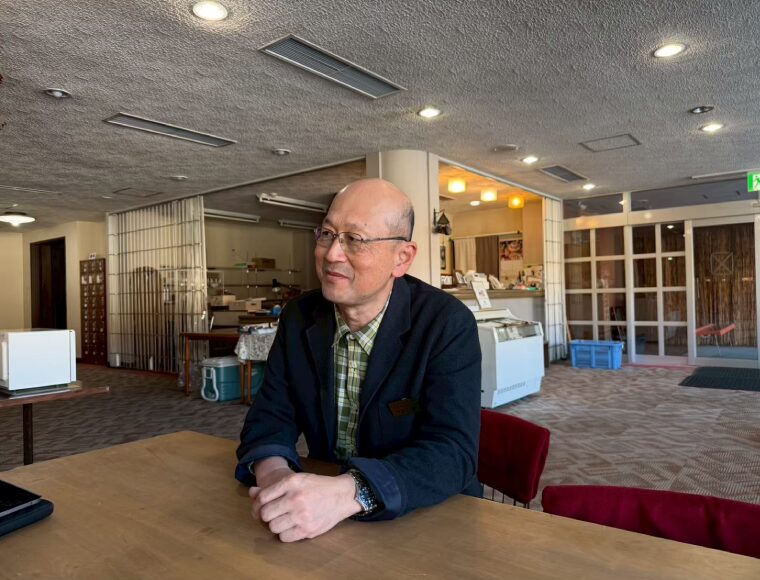
The Name “Dairoku” Comes from His Grandfather’s Birth Year
Hotel Dairoku began as a small mountain lodge. The origin of the name “Dairoku” is refreshingly straightforward. It comes from the name of the founder, the owner’s grandfather — and that name was connected to the fact that he was born in the sixth year of the Taisho era, 1917.
“He was born in Taisho 6. That’s all there is to it.”
The owner laughs as he says this. A birth year became a name, the name became the name of an inn, and it still remains today on a signboard in Ichinose. The unadorned simplicity of that origin seems to say a great deal about the character of the hotel itself.
The current owner is the third generation. After graduating from a hotel vocational school at the age of 20, he returned to Ichinose and spent many years working on the front line of the business. Even so, he says it was only relatively recently that he officially became the person responsible for carrying the inn forward as its head.
“When I got the certificate the other day, I was surprised myself. I thought, has it really only been this long?”
Because his father had entrusted him with much of the work while still in good health, he never felt overly burdened by the idea that he was “doing everything alone.” And yet, before he knew it, he had become one of the people who had seen most of the hotel’s journey firsthand.
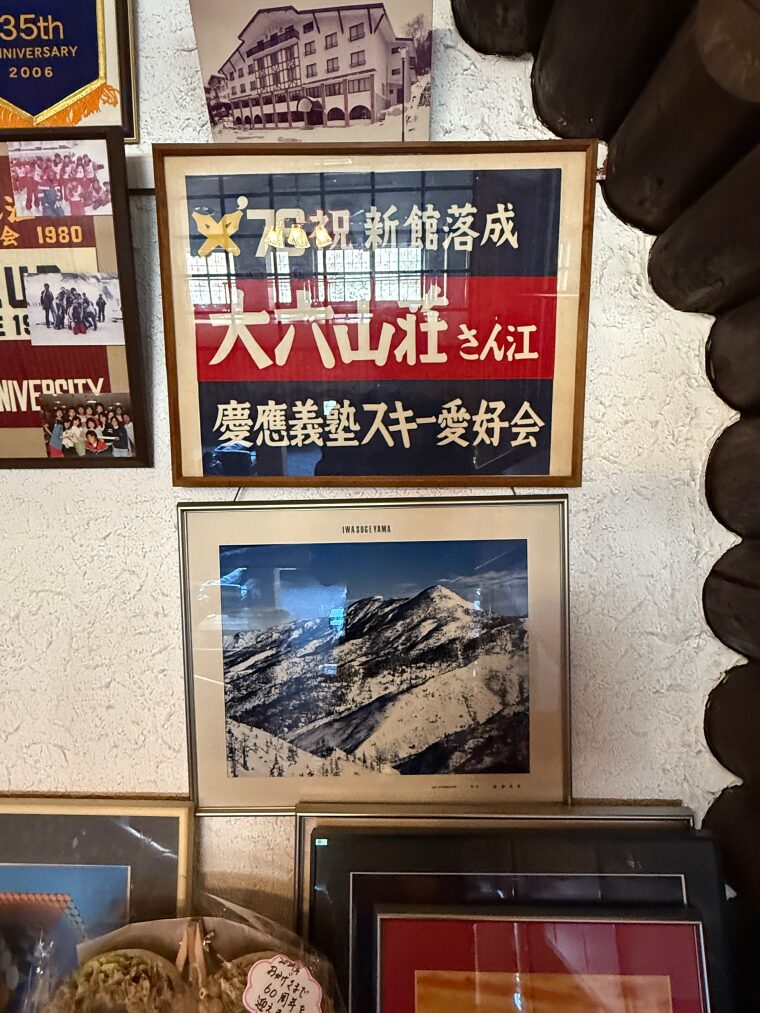
Why He Was Told to Come Home
Originally, he had planned to gain experience by training at another hotel. But just around that time, his father was chosen to serve as head of the Ichinose innkeepers’ association.
“My father was going to become the head of the association. He told me there would be about a hundred days a year when he had duties to attend to, so he said, ‘I’m sorry, but come home.’”
One hundred days — roughly a third of the year. And those duties were not limited to association meetings. They included all kinds of local coordination, from visiting people to collect seals of approval for borrowing land as temporary storage space for construction materials, to countless other practical tasks that naturally fell to the head of a local inn.
To inherit an inn in Ichinose means not only managing a hotel, but also taking on a role in keeping the community itself running. That reality was what called the young owner back home.
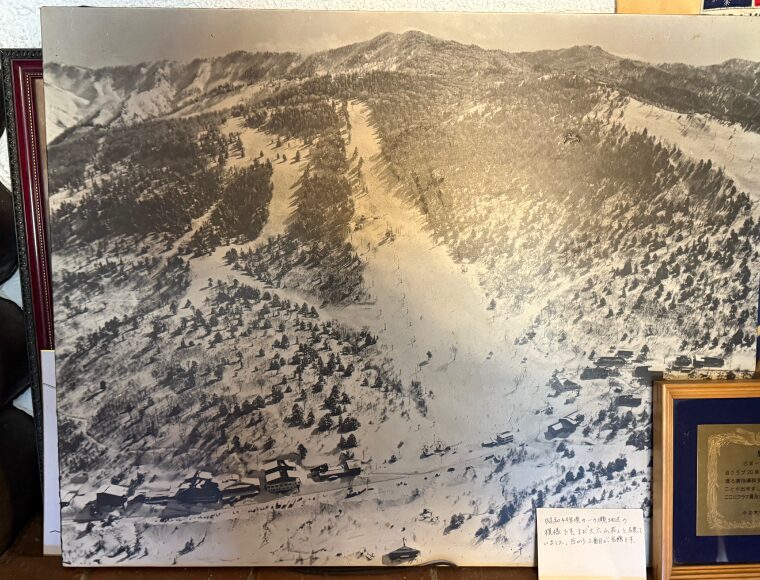
Ichinose Is Right at the Heart of Shiga Kogen
Shiga Kogen is made up of several areas, but Ichinose has the greatest concentration of hotels. With good access in every direction, it has long served as one of the lively centers of the resort.
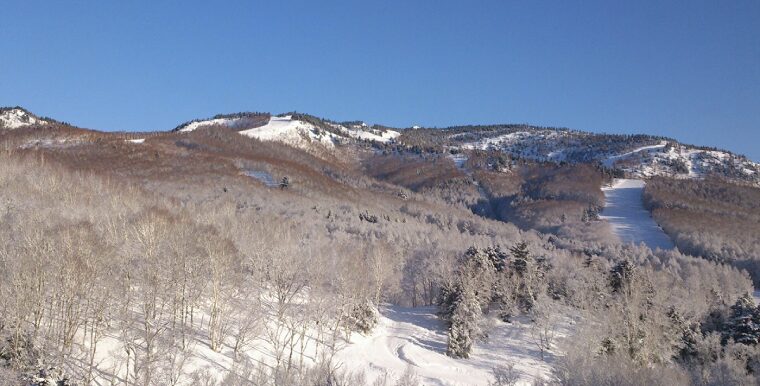
The owner says he especially loves the view from Panorama Parking. The scenery from Ichinose Family Ski Area and from the summit of neighboring Takamagahara is also exceptional. Convenience is not the only appeal of this land — it also has a beauty that makes you want to pause and take it in.
Then, with a small preface — “We do not really say this out loud, but…” — he continued:
“I think everyone here feels that we have to be the ones to lead.”
That pride does not come across as arrogance. If anything, it is the reverse side of a sense of responsibility: because Ichinose is at the center, the people here feel they must protect it themselves.
What He Learned by Stopping Once
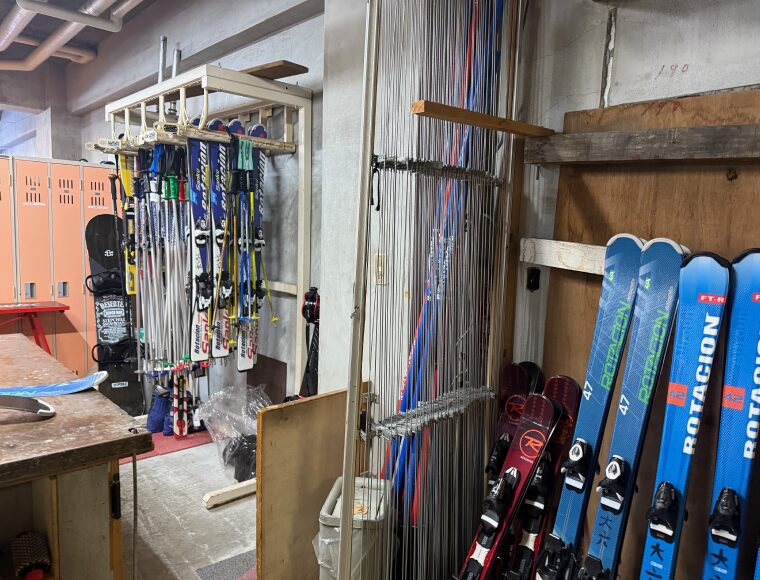
In Ichinose, and in Shiga Kogen more broadly, many of the basic systems that support daily life are maintained by the residents themselves. Even the water supply was originally brought in by earlier generations with their own hands, and its maintenance is still handled by the local community today.
“There are not many things we can simply leave to someone else. That is why we have so much otenma — communal work done by everyone in the community.”
Maintaining the trail up Mount Iwasuge is one example. Every summer, people split into groups to clear the grass along the trail, then offer sacred sake at the small shrine near the summit and pay their respects. The younger members carry brush cutters and fuel up to just below the summit — hard physical labor. As the community ages, the more physically demanding sections are now assigned regularly to the younger members.
One symbolic example of this kind of communal work is the raising of the noboribata banners for the “Yama no Kami,” the mountain deity festival. In fact, when the owner was serving as head of the association, he once decided to stop putting up the banners. The reason was simple: it was hard work.
But then something happened.
“Even though I was the one who stopped it, I kept feeling unsettled about it.”
Later, when he brought part of the tradition back, he finally felt at ease. It was only after stopping that he understood something: everyone complains that it is hard, but deep down, they actually like raising those banners.
“I think everyone working together to do that is a symbol of Ichinose’s unity.”
There may have been more convenient ways to do it. But if he had chosen them, he says, he probably would have regretted it again. Choosing to preserve a labor-intensive way of doing things — that, in itself, was something this place had long cherished. What can be changed, and what must not be changed. It was only by letting go once that the line between the two became clear.
What the Olympics Changed Was the Road
The 1998 Nagano Winter Olympics are impossible to ignore when talking about the history of Ichinose. Yet the owner’s answer was a little unexpected.
“I did not really feel that the Olympics themselves brought us great prosperity. But the thing we were most grateful for was that the roads improved.”
In preparation for the Olympics, the Joshinetsu Expressway was extended to Shinshu-Nakano, and the tunnel toward Hasuike was completed. The trip to Hasuike, which had once taken a great deal of time, became much shorter.
In fact, the Joshinetsu Expressway opened as far as the Shinshu-Nakano Interchange in 1997. Records show that construction moved quickly in order to be completed in time for the following year’s Olympics. More than memories of a glamorous international event, what remained most clearly for him was a road that supported daily life and business. It was a grounded perspective that felt very much like him.
Survivors from the Ice Age: Native Char from the Zako River
In winter, meals are mainly served buffet-style. But in quieter seasons, the hotel sometimes welcomes guests with carefully prepared set meals. One such dish is salt-grilled char.
This is not just any char. The fish are wild char raised in the nearby Zako River, obtained through a skilled local fisherman.
“The char here are like survivors from the Ice Age.”
That expression is not an exaggeration. The Zako River, whose headwaters lie in the Mount Iwasuge range, is one of the rare rivers in Japan where the Shiga Kogen Fisheries Cooperative does not release hatchery fish at all. Instead, tributaries are designated as no-fishing areas, or breeding streams, to protect the native char population. It is a clear mountain river that has also attracted attention as a model case by Japan’s Fisheries Agency.
Pure wild char, marked with vivid orange spots, grilled over charcoal and served whole. It is a quiet luxury: tasting the nature of Ichinose itself on a plate.

Toward the Future of Ichinose
Finally, we asked him about the future. One idea the owner is currently keeping in mind is to create a place where all the residents of Ichinose can gather together.
Normally, local gatherings tend to be divided: the men gather with the men, the women with the women, the younger people with the younger people. That is exactly why he wants to create an opportunity for everyone to come together in one place and do something as a community.
“Everyone could work together, then gather around a fire afterward and cook curry or something. I would like to do something like an ‘Ichinose Festival.’”
In the past, there was a Bon Odori dance during the Obon season, with night stalls and a natural place for people to gather. He hopes to bring back that warmth in a new form. In order to pass on what has been inherited to the next generation, the owner has quietly begun to move forward.
What Hotel Dairoku Holds Dear
Even as life becomes more convenient, the people here do not let everything slip from their own hands. Even when it is difficult, they protect the mountains together. What the third-generation owner of Hotel Dairoku shared with us was, in many ways, the way of life of Ichinose itself.
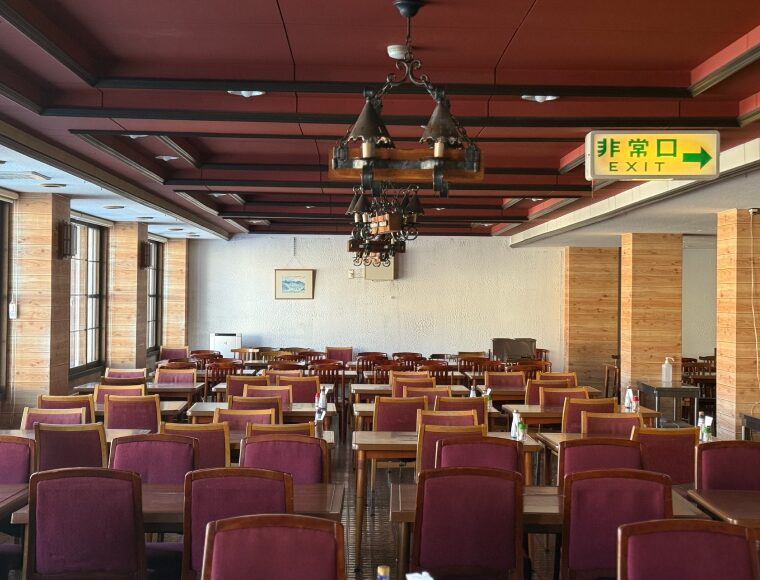
Proximity to the slopes, a varied selection of meals, and time to unwind in the large public bath — Hotel Dairoku of course offers the comforts guests look for in a mountain hotel. But beneath those comforts runs the quiet work and presence of the people who keep this place alive.
The next time you visit this area, after a day spent on the snow, try remembering that for a moment. The Shiga Kogen you know may begin to look a little different.
Hotel Dairoku Facility Information
| Item | Details |
|---|---|
| Facility Name | Hotel Dairoku, Ichinose, Shiga Kogen |
| Address | 7149 Hirao, Yamanouchi-machi, Shimotakai-gun, Nagano 381-0401, Japan |
| Telephone | +81-269-34-2210 |
| Fax | +81-269-34-2953 |
| Access by Public Transportation | Take a bus bound for Shiga Kogen from Yudanaka Station on the Nagano Electric Railway, or take a direct Nagaden Bus from the East Exit of Nagano Station to Shiga Kogen. The nearest stop is “Ichinose.” ※Please confirm the walking time from the bus stop. |
| Access by Car | From the Shinshu-Nakano IC on the Joshinetsu Expressway, drive toward Shiga Kogen and Ichinose. ※Please confirm distance and travel time. |
| Parking | Free parking available in front of the hotel. ※Please confirm the number of spaces. |
| Ski Slopes | Close to popular ski areas including Ichinose Family Ski Area. ※Please confirm walking time to the slopes. |
| Guest Rooms | Primarily Japanese-style rooms. ※Please confirm availability of Western-style or Japanese-Western rooms and total number of rooms. |
| Large Public Bath | Large public bath available. ※Please confirm spring/water type and bathing hours. |
| Meals | In winter, meals are mainly buffet-style, with Japanese, Western, Chinese dishes and desserts. Set meals may be served depending on the season. In summer, salt-grilled wild char from the Zako River may be offered. ※Please confirm availability and conditions. |
| Check-in / Check-out | Please confirm directly with the hotel. |
| Payment | Major credit cards accepted. |
| Official Website | https://shiga-dairoku.com/ |
| Reservation Site | https://resv.shigakogen.gr.jp/dairoku/ |
| https://www.instagram.com/hotel_dairoku/ |
*Accommodation plans, operating dates, meal contents, and public bath hours may vary depending on the season. Please check the official website or contact the hotel directly for the latest information.