
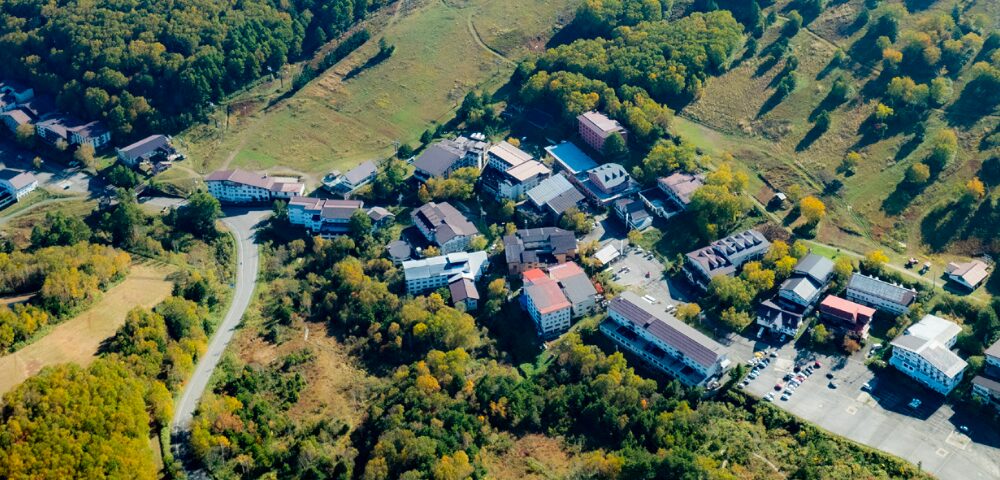
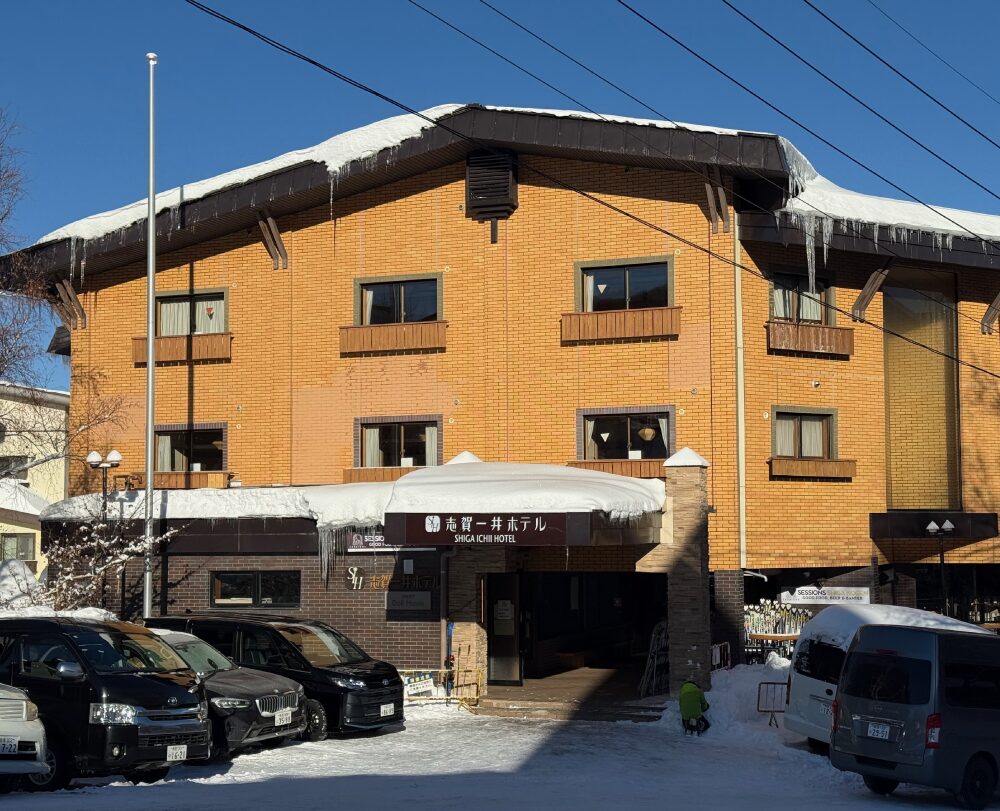
This article was edited based on an interview with Mr. Ichiroji Kodama, president of Shiga Ichii Hotel, one of the earliest inns to operate in Shiga Kogen’s Ichinose area. Centered on the testimony of a hotelier who witnessed the development of Ichinose up close and helped shape its path, this article traces the history of the area.
Located near the center of Shiga Kogen, Ichinose is now known as a convenient base for extended stays, with hotels gathered together, buses coming and going, and easy access to a wide range of ski areas. But this convenience did not exist from the beginning. Ichinose was the “last” accommodation district to be developed in Shiga Kogen — a place built one inn at a time by human hands on a snowy mountain where there were once no roads and no water infrastructure. By following the story of one of the first hotels to open here, we begin to see the history of Ichinose itself.
On Christmas Eve, a Light Came On in the Snowy Mountains
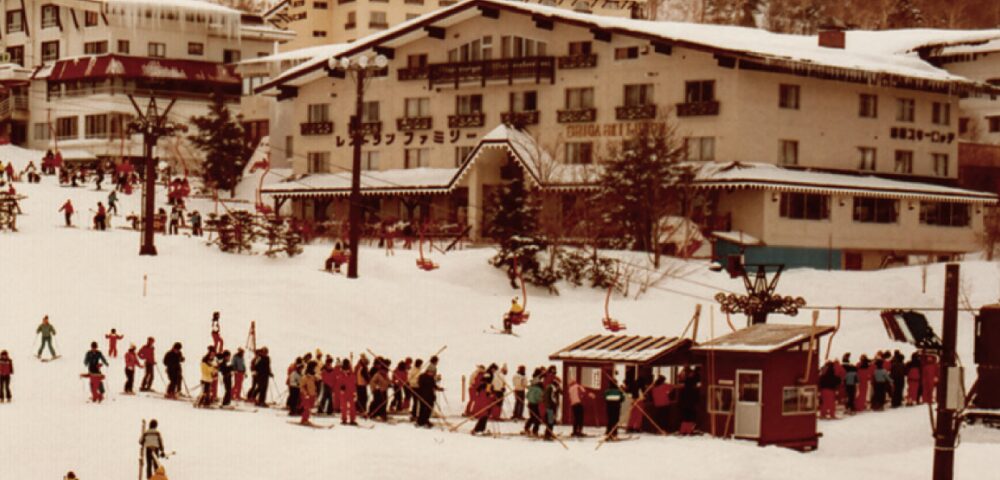
December 24, 1964. On that night, the small mountain lodge that would later become Shiga Ichii Hotel — originally opened under the name Ichiisō — welcomed its first overnight guests. They were a group of six students from Osaka. Wanting to ski at a newly opened ski area in Shiga Kogen, they had come up the mountain without even deciding where they would stay.
At the time, there was still no road that allowed cars to reach Ichinose. Visitors traveled from the foothills by ropeway and lifts, then walked through the snow for the final stretch. Luggage and skis were loaded onto sleds and pulled by the inn staff. That was the era. After receiving a call from the ropeway station manager at Hasuike saying, “Some guests have arrived — can you take them in?” the founder is said to have walked down through the snow, pulled the guests’ sled, and guided them to the inn.
For the family that had just opened the inn, everything was a matter of trial and error. They were not even sure how to say “Welcome” properly, the current owner recalls, remembering what the previous generation told him about that night. It was a small but definite starting point in the history of one of Japan’s leading snow resorts.
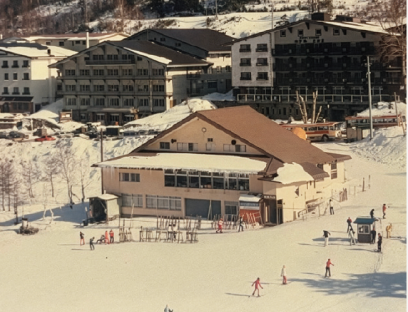
Ichinose Was the “Last Area to Be Developed”
Why did the inns of Ichinose appear later, and why did they develop together as a group? The answer lies in the broader history of Shiga Kogen.
Tourism development in Shiga Kogen had already begun before the war. In the mid-1930s, Japan’s Ministry of Railways, through the Board of Tourist Industry, selected “international ski areas” from ski resorts around the country in an effort to attract foreign visitors. Shiga Kogen was designated as part of the Joshinetsu International Ski Area, along with areas such as Myoko and Akakura. In 1937, Shiga Kogen Hotel opened as a government-backed hotel built by Nagano Prefecture and operated by Kyoto Hotel. It became a social gathering place for writers, politicians, and prominent figures. The hotel ceased operations in 1999 and is now preserved as the Shiga Kogen Historical Memorial Museum. According to stories passed down in Ichinose, the invitation and development were supported by Baron Kishichiro Okura of the Okura zaibatsu in Tokyo, while the local Wago-kai provided a vast tract of land and Nagano Electric Railway took charge of development.
After the war, the Maruike area was requisitioned by the Allied Occupation Forces, or GHQ, as a recreation area, and was not returned until 1952. During that period, in 1949, the area including Shiga Kogen was designated as Joshin’etsukogen National Park. From then on, people became increasingly aware of the need to balance the value of tourism with the protection of nature.
From the 1950s onward, private ski areas opened one after another, and the number of visitors grew explosively. This raised a serious concern: if people continued entering the national park in an uncontrolled way, the environment could not be protected. Under an agreement between environmental authorities and the Wago-kai, the Ichinose district was developed as a planned “group accommodation district,” where inns would be arranged in an organized way. And this was done last of all within Shiga Kogen. Rather than expanding wherever possible, Ichinose was shaped while keeping overall scale under control. The fact that Ichinose still maintains a sense of unity as an area today is rooted in the way it began.
The Fact That It Began with a Lottery
One fact symbolizes the character of Ichinose especially well: the locations were decided by lottery.
In 1963, the plan included 30 inns and 10 dormitory lots. There were more applicants than available spaces, and those who were not selected went on to other areas such as Yokoteyama and the Zako River side. Applications continued to be accepted until 1973, and in the end, about 25 inns came to stand side by side in Ichinose.
In typical resort development, operators choose the most favorable land and refine it according to their own plans. Ichinose was different. Some inns drew lots directly in front of the ski area, while others received plots several dozen meters away. Whether a location was good or less convenient came down to luck. Because of that, a distinctive sense of equality took root here.
“Everyone entered by lottery, equally,” the current owner says. He believes that spirit lies at the foundation of Ichinose. Twenty-five inns, most of them small-scale businesses, joined forces with a shared determination to catch up with and surpass the larger inns in Maruike, which had developed earlier. Costs paid jointly were shared equally by everyone. Ichinose is the only area in Shiga Kogen where the innkeepers’ association established its own independent office. Behind the close relationships among the inns and the strong unity of the association was this “equality born from a lottery.”
Building Inns on a Snowy Mountain with No Roads and No Water
The hardships of the early development period are difficult for today’s travelers to imagine. In winter, there was only a single rough route through the snow, and everything else had to be opened by hand. Building materials were carried up by several people working together. But the most serious challenge of all was securing water.
Inns whose own land did not have water had to search deep in the mountains. They relied on the knowledge of mountain workers who had made charcoal or cut timber in summer. Hearing old accounts such as “that stream does not dry up even in winter,” they went out to check each place for themselves. Eventually, the inn owners formed the Ichinose Waterworks Association in 1963, borrowed funds from the agricultural cooperative, buried perforated pipes in mountain streams to collect water, gathered it into tanks, and used pumps to send it toward the ski area. They built a drinking water system from scratch. These hotel owners were not only innkeepers; they were also builders and caretakers of infrastructure.
As the ski boom brought more visitors, wastewater became the next problem. Inns accepted more guests than their septic tanks could handle, and rivers became polluted, prompting guidance from the public health center. In response, Ichinose developed what is said to have been one of Japan’s first wastewater treatment plants in a mountain resort area. It was built downstream from the river flowing through Ichinose, near the area opposite the Prince Hotel South Wing. Beneath the convenience of the tourist area lay repeated, practical efforts to welcome people without destroying the natural environment.
How Ichinose Became a “Town”
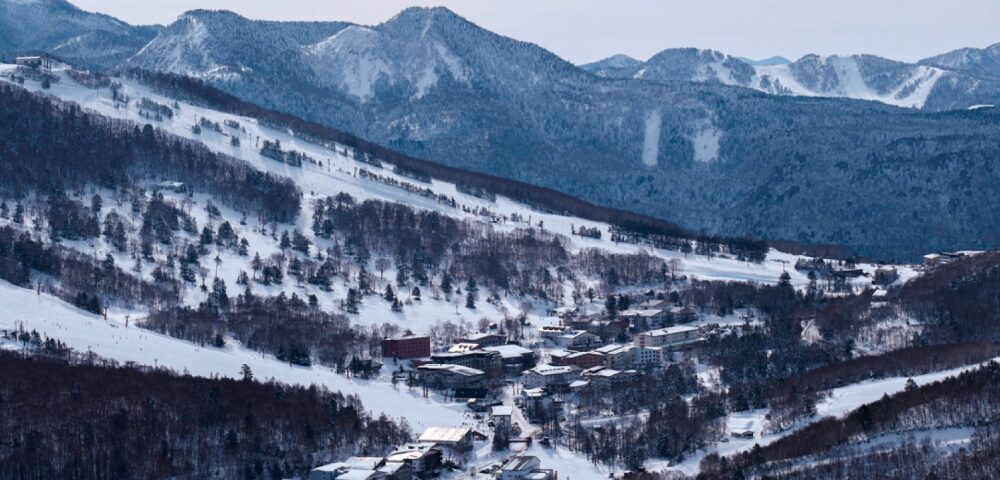
The ski boom transformed Ichinose from a collection of individual inns into something closer to a small town.
There was the student ski boom of the 1970s, followed by demand from school ski trips, and then the peak around 1991 to 1992. According to figures announced at the time, Shiga Kogen welcomed around 3.5 million skiers during the winter season alone, compared with roughly one million today. After the economic bubble burst, tourist destinations across Japan struggled. Even so, Shiga Kogen remained relatively steady from the 1991 decision to host the Nagano Winter Olympics through the 1998 Games, with the decline becoming more pronounced only after the Olympics.
What made Ichinose strong during that time was that the inns gathered together and functioned as a town. It was not a single isolated inn standing alone. There were inns clustered together, places to eat, and people moving through the area. That collective atmosphere gave the district strength — the kind of strength that makes visitors think, “If the price is the same, I would rather stay here.”
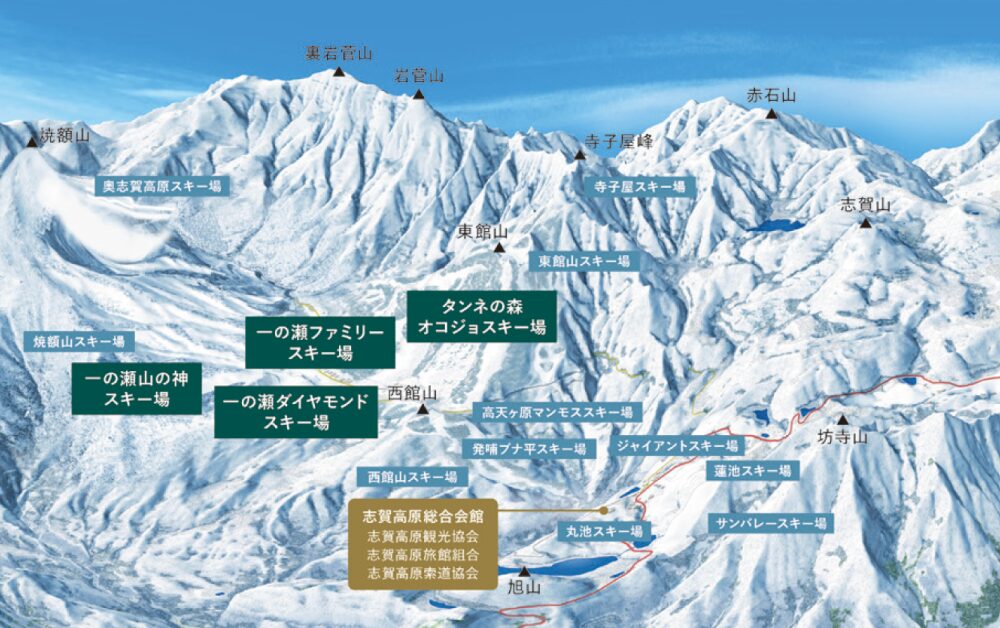
Location also began working in Ichinose’s favor. Okushiga Kogen Ski Area opened in 1969, followed by Yakebitaiyama Ski Area in 1983, and winter buses began running farther into the area. For guests heading to the ski areas deeper in Shiga Kogen, staying in Ichinose became easier than staying in areas farther down. In the 1983–84 season, shuttle buses connecting the ski areas also began operating, and Ichinose’s presence as a “base area” within Shiga Kogen grew stronger. The fact that Ichinose is easy to use even for first-time visitors today is not a coincidence. It is the result of a long process of growth.
Why an Area Without Hot Springs Chose to Protect What It Had
Ichinose does not have hot springs. But that was not simply an absence.
In fact, a hot spring association was established in Ichinose in 1971, and there was a time when local inns hoped to become hot spring inns by drilling 80 meters underground. But they did not strike a good-quality source, funds ran short, and the association dissolved within a few years. In a volcanic country, drilling also carried the risk of not knowing what might emerge.
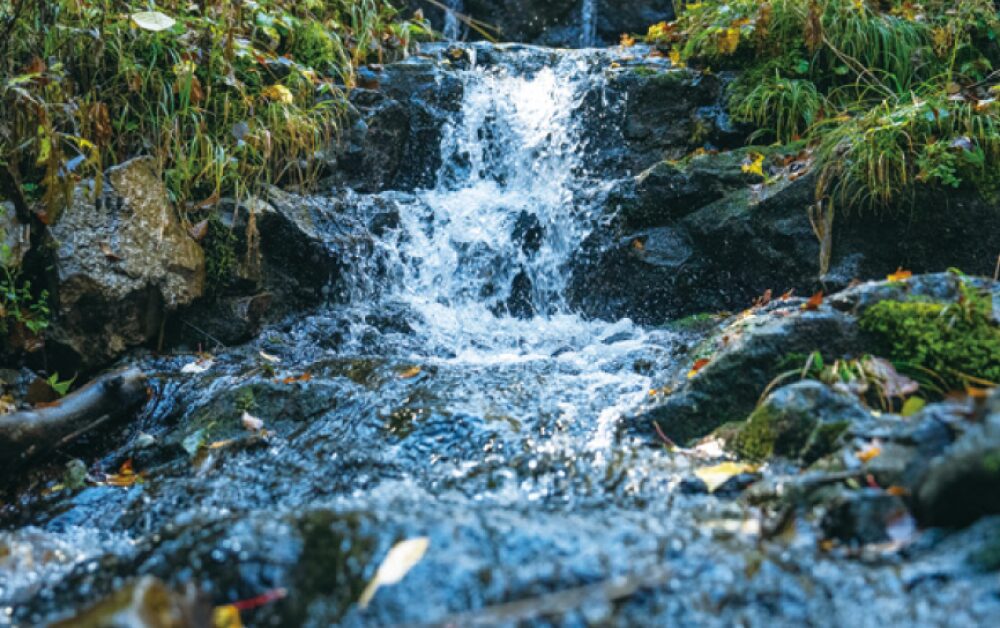
Meanwhile, it gradually became clear that precious native char lived in the Kozako River, which flows just below Ichinose. These were not fish introduced from elsewhere as young fry, but a native population that continued through natural reproduction alone. Surveys by the fisheries cooperative and freshwater fish researchers found that their population density was unusually high even by national standards, surprising specialists. In place of hot springs, the Ichinose water system held another kind of value: clear mountain streams and an ecosystem that had continued since ancient times.
This river belongs to a different water system from the Yokoteyama side. It flows from the Kozako River into the Nakatsu River, then into the Chikuma River and the Shinano River, eventually reaching the Sea of Japan. Precisely because there were no “extra elements” such as hot spring water mixed in, the native char may have been preserved.
This choice carries renewed meaning today. In 1980, Shiga Kogen was registered as one of Japan’s first UNESCO Biosphere Reserves. The purpose of such reserves is not only strict nature protection, but also coexistence between human life and the natural environment. The Kozako River is known as the “Ichinose Native Char Conservation Area,” and preservation has continued through otenma, a traditional form of community labor passed down locally. Rather than polishing something obvious, Ichinose turned what it did not have into a positive value. In that sense, the stance of hot-spring-free Ichinose may have been ahead of its time.
Reflecting on Past Success, and the Future of Ichinose
One of the most striking parts of the interview was the owner’s honest reflection on the past.
During the ski boom, Ichinose experienced a period when “guests came as soon as the doors opened.” While major inns across Japan spent large sums on sales and marketing, visitors came to Ichinose with little need for active promotion. Because the area was so blessed by its ski terrain, it did not fully develop long-term investments or next-generation strategies. The owner spoke of this as a reflection that spans generations. Without a clear leader waving the flag and asking what Ichinose should become 50 years later, the baton was passed to the current generation.
That is exactly why reconstruction — or reengineering — is now beginning in Ichinose. As the number of Japanese skiers continues to decline due to the falling birthrate, inbound tourism has become a source of hope. International visitors began increasing gradually around seven or eight years ago, then accelerated sharply in recent years. The focus is shifting from student groups toward general travelers and inbound guests. Plans are also beginning to take shape for a more one-stop experience at the center of the inn district, covering not only accommodation but also food, rentals, activities, and tour guidance.
What the owner hopes for is that the younger generation will look out at the world and discover what makes Ichinose shine. He wants them to extend their antennae not only toward the cities, but toward the wider world, and to try moving forward together, whether as three people or ten. The Ichinose DNA of “let’s do it together,” born from the equality of the lottery, is still being passed on to younger people today. “The past cannot be either denied or affirmed. It is reality. So the question is how we create the next 30 or 50 years without being bound by it.” What he described was a thoroughly future-oriented way of thinking.
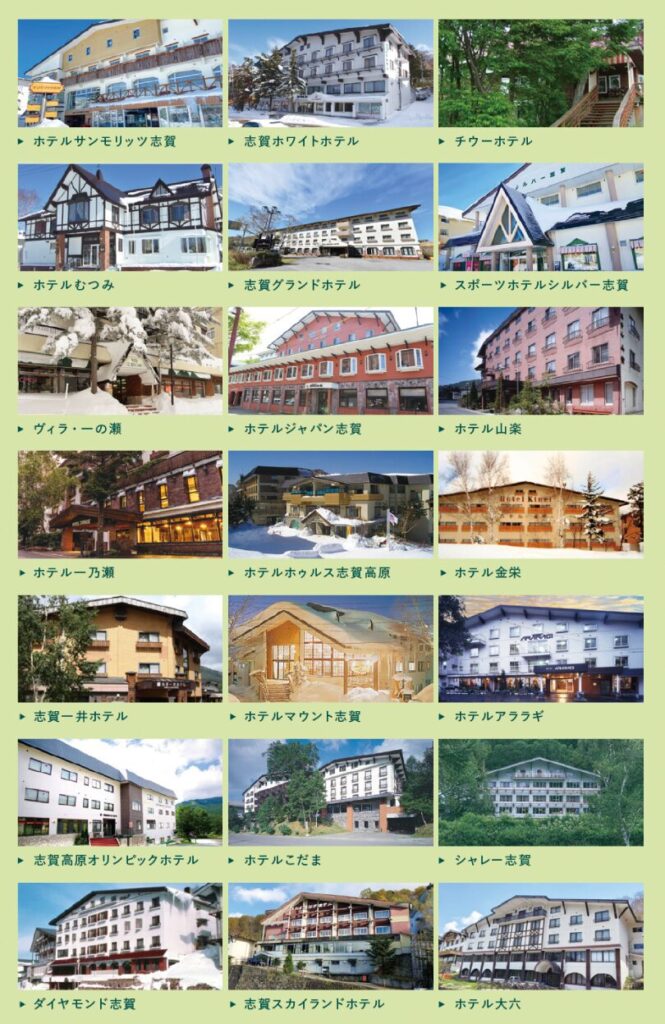
When You Know the History, the Scenery Changes
Shiga Kogen Ichinose is not simply an area beside the ski slopes. Before the war, there was an ambition to create an international ski area. After the war, the district was opened in a planned way while considering how tourism and nature protection could coexist. It began equally through a lottery, opened roads, drew water, developed wastewater treatment ahead of much of the country, and chose to protect clear streams and native char rather than define itself by hot springs. Today’s Ichinose stands on the accumulation of all those efforts.
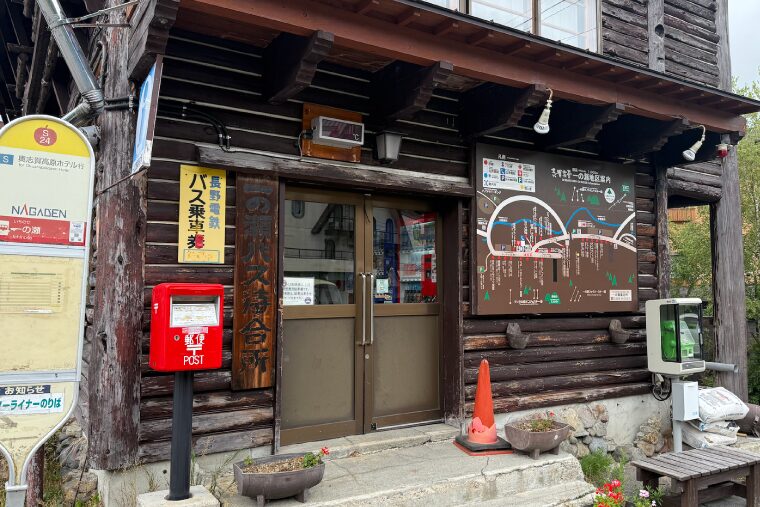
Once you know this background, the inns, roads, and bus stops begin to look a little different. The convenience in front of you starts to reveal itself as the result of someone’s ingenuity and cooperation.
For those who have visited Shiga Kogen many times, and for those coming for the first time, Ichinose is a place that becomes more interesting the more you know its story.
*This article was compiled based on an interview with Mr. Ichiroji Kodama, president of Shiga Ichii Hotel, one of the earliest hotels to continue operating in Shiga Kogen’s Ichinose area. Some facts, including years and facility histories, have been checked against public sources, but descriptions of the early development period and related episodes include accounts based on testimony passed down within the local community.
*Images in this article are referenced from the Shiga Kogen Storybook.