
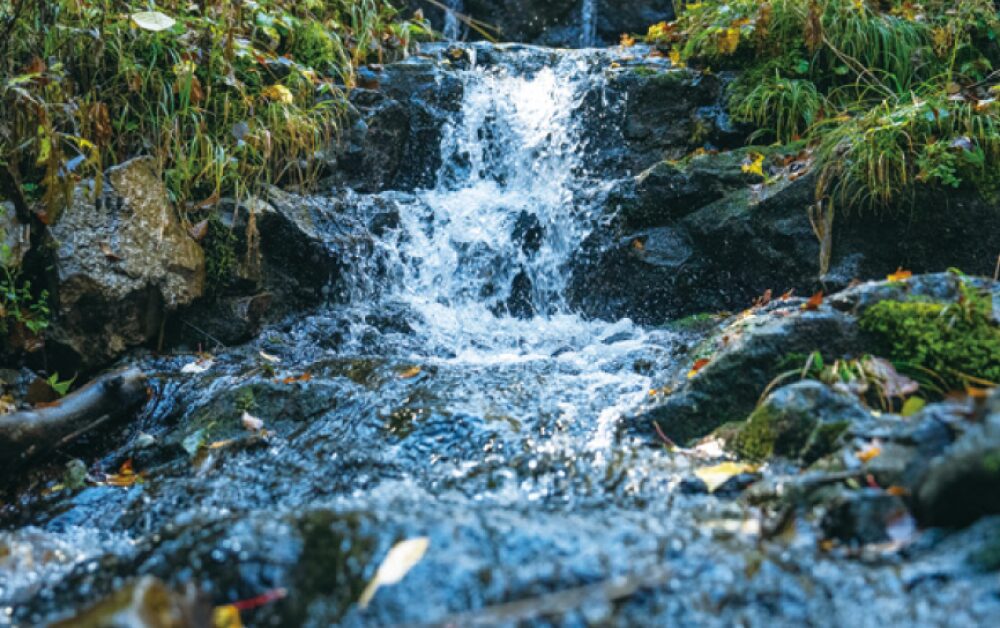
At an elevation of 1,600 meters, Ichinose sits near the center of Shiga Kogen. Today, it is one of the resort’s main hubs, where 21 inns and hotels stand close together and ski slopes spread out in every direction. But this lively area was originally an empty highland, built from scratch by the people who came here. And throughout that history, Ichinose has always lived alongside water. Here is a brief introduction to what kind of place Ichinose is, and the story it has carried over the years.
Ichinose: At 1,600 Meters, in the Heart of Shiga Kogen
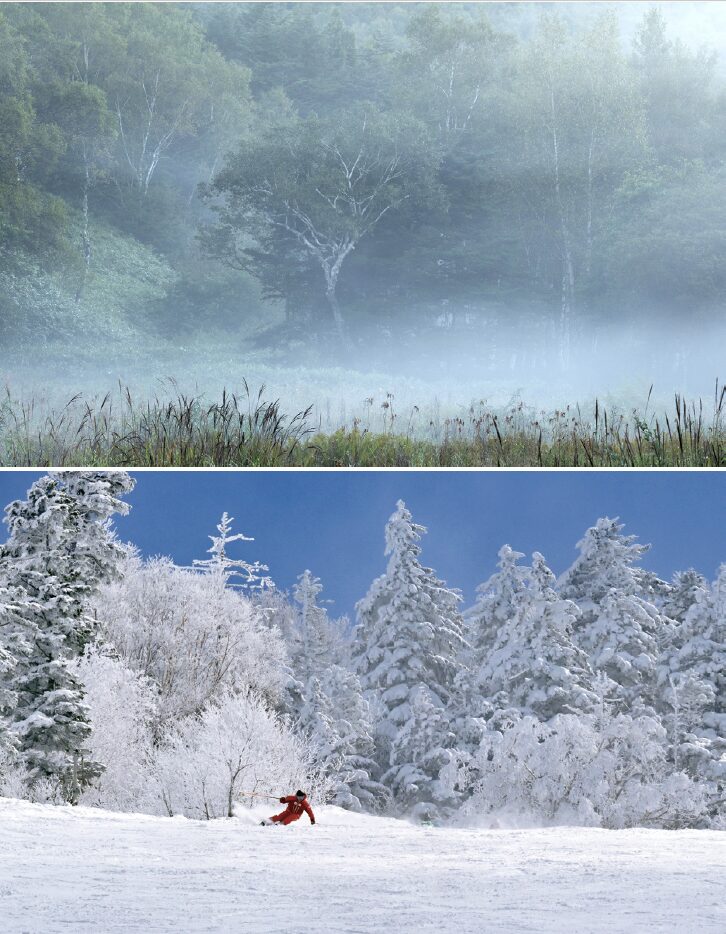
Shiga Kogen stretches across a vast highland area at elevations from around 1,300 to 2,300 meters. Ichinose is located near its center. With 21 accommodation facilities and ski slopes gathered compactly together, it is especially convenient in winter, when guests can ski between multiple areas. Within Shiga Kogen, one of Japan’s largest snow resorts, Ichinose truly serves as a central base.
Once the snow melts, the area takes on an entirely different character. From summer through autumn, Ichinose becomes a refreshing highland retreat where visitors can stroll among alpine plants and wetlands in the cool mountain air. The Kozako River, a clear stream flowing at the foot of the slopes, is also known as a river inhabited by rare native char.
It is said that “Shiga” means “a place rich in water,” while “Ichinose” refers to “the first shallows of a river” — in other words, the beginning of water. True to that name, the people who live here have put down roots while valuing every single drop.
It All Began on an Empty Highland
The rich natural environment of Shiga Kogen has long supported the lives of people in the foothill communities. Since the Edo period, local residents used the mountains and fields collectively as common land, known as iriaichi. To protect those rights and manage the land, the Wago-kai Foundation was established in 1927, mainly by residents of the Kutsuno district at the foot of the mountains.
Wago-kai turned its attention to tourism development as a new way to make use of the mountain landscape, and began developing ski areas together with Nagano Electric Railway. Over time, Shiga Kogen grew into one of Japan’s leading resorts, known as the country’s first international ski area. After it was designated a national park in 1949, resort development proceeded carefully under official approval, with an effort to balance development and nature conservation.
The development of Ichinose began in 1963. Settlement started by recruiting interested members from within Wago-kai. What they were given, however, was literally empty land — only boundary lines marking plots they were allowed to use. There were no buildings, no waterworks, no electricity, and no heating. The settlers had no choice but to prepare everything one step at a time with their own hands. It was truly a beginning from zero.
Otenma: Working Together to Secure Water
As one inn after another began to appear, the first thing people joined forces to tackle was securing water. The formation of a waterworks association marked the real beginning of communal life in Ichinose.
But as the number of skiers increased, the amount of water needed also grew. Building water-collection systems to draw water from sources deep in the mountains required enormous labor and expense. So all residents took part in communal work known as otenma. The people of Ichinose, almost like members of a shared community of fate, continued to work and sweat in order to protect their water.
The Day the Char Disappeared — and the Community Turned Toward Conservation
Behind this development, serious challenges emerged. As inns and guests increased, wastewater treatment could not keep up, and the water quality of the Kozako River deteriorated. The precious native char, which can only live in clean water, disappeared from the river.
The community also experienced intense conflict with the local fisheries cooperative. Gradually, however, people came to understand the meaning of protecting the natural environment of the place where they lived. They invested a vast amount of money and built the Ichinose Joint Wastewater Treatment Plant, a high-standard facility said to be the first of its kind in a Japanese mountain resort area.
The efforts did not stop there. To prevent wetlands from drying out, riverbanks were rebuilt not with concrete, but with water-permeable gabion baskets. Horizontal channels were dug into ski slopes so that snowmelt and rainwater could return underground, helping restore declining spring water. These innovations born in Ichinose later spread to the neighboring Takamagahara area and eventually across Shiga Kogen.
As a result, native char returned to the Zako River and now reproduce naturally without relying on stocking. Today, the river is known among anglers across Japan as a place where wild char can be caught. In 1980, Shiga Kogen was also registered as one of Japan’s first UNESCO Biosphere Reserves.
Incidentally, did you know that Ichinose is the only area in Shiga Kogen without hot springs? It is said that local people chose to “give up” hot springs because they believed that if hot spring water flowed into the Zako River, char would no longer be able to live there. In doing so, they protected the river and the surrounding nature.
Living with Water
More than half a century has passed since boundary lines were first drawn across an empty highland. The people of Ichinose have continued to share every drop of water, overcome conflicts when necessary, and choose a way of living together with nature. Each innkeeper carries both responsibility and pride as a resident of this land, and efforts to conserve and coexist with the local ecosystem continue today.
When you ski the slopes, walk through the wetlands, or touch the clear water flowing from the tap at your inn, we hope you will remember the story behind each drop. If you do, your time in Ichinose may begin to feel a little different.